Memories - Sedef Island Recollections
Milliyet Newspaper — July 28, 1956 — Page 3
SEDEF ISLAND IS BEING TURNED INTO TURKEY'S CAPRI
To make the island, one mile off Büyükada, a complete place of rest, all homes will be built within a park
NEDRET SELÇUKER
If AVA GARDNER postpones her fourth marriage until next year, she may perhaps spend her honeymoon on Sedef Island. For within the next year or two, little Sedef Island, just beside Büyükada, will become a "holiday island" for exactly 180 families. Nor is the idea of giving it the character of a "honeymoon island" being overlooked... Imagine a peaceful honeymoon without noise or commotion. Without trams, buses or automobiles. And with such silence: a week's holiday without horses or donkeys (do not say an island cannot be without donkeys; this one will be), without roosters, chickens or turkeys. Even without walls...
HOMES AND VILLAS MARKED OUT WITHOUT WALLS
"The homes will not surround their boundaries with walls; every home will stand within a park."
Şehsuvar Menemencioğlu, the island's owner, had been considering how to turn Sedef Island into a refreshing tourist destination for local and foreign visitors ever since 1941, during the war years, and he placed particular emphasis on this point. In his view, the chief principle for those wishing to enjoy themselves and rest on the island should be "to eliminate excessive curiosity and respect the repose of others." To achieve this, the dividing walls that restricted openness of spirit and further provoked prying eyes into everyone's private world first had to be removed. The houses were to appear almost scattered among the greenery.
The island was to bring its residents peace, rest and a complete holiday, while becoming a "world of refined entertainment" rather than one of wild revelry. It was therefore also necessary to prevent the keeping of animals, especially poultry.
NO TWO-STOREY BUILDINGS!
"The eleven villas to be built will under no circumstances have two storeys. We have specifically added this to the specifications."
Şehsuvar Menemencioğlu must have looked with dismay at the many-storeyed and peculiar so-called "splendid villas" in summer resorts such as Erenköy, Caddebostan and Suadiye, for this was what he feared most. What if a competition in wealth began on the island and seven- or eight-storey "summer homes" rose like New York skyscrapers? Then would come the letting of each floor separately. Better to stop it at the source.
30,000 TREES, 180 HOMES
MENEMENCİOĞLU nearly swallowed his tongue when an official in Ankara replied, "My dear sir, why should such a tiny island need so many houses? Two or three would be enough." After all those years of study, he was striving to turn this deserted island into a Capri, only to be regarded as "a speculator." Gathering all his composure, he explained his ideas one by one, openly and clearly. In brief, this was his position:
"Land speculation is the furthest thing from my mind. I am prepared to undertake everything necessary to turn Sedef Island into Turkey's Capri. This island can comfortably accommodate 180 homes..."
The explanations and plans were satisfactory. On July 6, the Ministry of Public Works approved the island's development plan after enlarging its green areas and plots by 20 to 30 percent. The shareholders of the Sedef Island Tourist Facilities and Construction Cooperative could now begin the title deed and cadastral procedures.
Sedef Island had been brought within Istanbul's development boundaries. This was essential, since otherwise it would have been impossible to obtain bank loans or operate a ferry service.
As a first step, 5,000 trees of various species, between three and six years old, had been planted and were being watered. The necessary preliminary reservoirs and cisterns had been built, and irrigation pipes laid. A total of 30,000 trees were to be planted across the island.
Of the island's land, 170 dönüms were allocated to green space and 130 dönüms to homes with gardens.
THE ISLAND'S WATER
Construction immediately began on an 1,100-ton reservoir to provide the main water supply for Sedef Island, one kilometre from Büyükada. All materials for the electrical installation were obtained with the utmost urgency. It was calculated that the island could be illuminated by September at the latest.
The island was to be settled in three phases. Sixty-three homes would be built in the first year, and 63 distinguished families submitted the first applications. An agreement had been reached with Emlâk Kredi Bankası on financing, providing each shareholder with the possibility of a 10,000-lira loan. Of this total credit of 650,000 liras, 250,000 would be issued in 1956 and 400,000 in 1957.
The homes would cost 175 liras per square metre, far below the free-market rate. The cost was low because the island had three lime kilns and its stone quarries could be used. The houses would be charming but not luxurious. The least expensive was Type A, covering 90 square metres and costing approximately 15,750 liras. Eight house plans had been prepared. Their architect had kept Turkish character in mind while making comfort the objective. The eighth type, to be built on a 212-square-metre plot, might cost 41,000 liras, while the other types ranged between 20,000 and 30,000 liras.
THE ANGLERS' CLUB
BEACHES, tennis courts, an open-air theatre and cinema, a miniature golf course, an attractive casino on the hill and, finally, an anglers' club. If you are an enthusiast and wish to fish, this club will save your tackle from being carried back to the city every week or rusting in your island home. After a restful fishing trip, perhaps you will treat yourself at the casino with the island's own special wine.
GUESTS
It would also be possible to visit Sedef Island as a guest. One-room cottages were planned for this purpose near the beach. Those who wished could spend their weekends there and perhaps sunbathe beside Ava Gardner, Marilyn Monroe or a prominent statesman visiting Turkey. Şehsuvar Menemencioğlu was considering holding the island's opening ceremony during the next summer season.
* * *
One of the most intriguing stories to have survived from the years when Sedef Island was being reforested and its first settlement was beginning to take shape concerns an unidentified person who tried to grow coffee on the island.
The story was told by Refii Cevat Ulunay, a well-known journalist and writer of the period, in his column titled “The Black Pearl,” published in the Milliyet newspaper on November 13, 1957. Ulunay mentions a reader who had previously sent him unsigned letters bearing only the address “Sedef Island.” He says that he did not know who the reader was and had never even seen Sedef with his own eyes. He had, however, heard that new roads were being built and a beach was being created on the island. He describes Sedef as a new place to live that, despite its proximity to Istanbul, stood apart from city life.
One day, this anonymous resident of Sedef sent Ulunay a small bottle. Inside were coffee beans that the sender claimed to have grown on Sedef Island.
In the accompanying letter, the resident explained that he had been trying, with great difficulty, to grow coffee on the island since the previous year. His first harvest was extremely small. He had kept half of the crop for himself and sent the other half to Refii Cevat Ulunay to taste. He also asked the writer to pray for a more abundant harvest the following year.
Ulunay opened the bottle with curiosity. What he saw really did resemble the coffee beans he knew. He poured them onto his desk and counted them one by one: exactly 192 beans. By the writer's calculation, that amount would make only two cups of coffee.
But a question immediately occurred to Ulunay: how could coffee, a plant of warm climates, have grown on Sedef Island in the middle of the Sea of Marmara?
He explored the question humorously in his column. He recalled that coffee grew in the warm regions of South America, Africa, and Asia, and that it had even been suggested that Adana's climate might be suitable for it. Sedef Island, however, did not seem very convincing to him. Were there hot springs beneath the island warming the soil? Or had this curious island resident grown the coffee in a specially prepared little greenhouse?
In the end, Ulunay did not dismiss the possibility that his reader's account was true. If coffee really could be grown on Sedef, he thought it would be a remarkable experiment for Istanbul. Yet, considering the effort required to produce just 192 beans, he also treated the idea of Sedef becoming a major coffee-producing center with humor.
This is also where the title “The Black Pearl” comes from: the coffee bean had become a little “black pearl” of Sedef Island.
This brief story is one of the fascinating details in the history of Sedef Island. It took place in 1957, only one year after the 1956 development plan was approved and Şehsuvar Bey and Rey’an Hanım began their efforts to reforest the island and open it to settlement. Ulunay's mention of completed roads and a beach also provides valuable newspaper testimony that the new Sedef project, which existed on paper in 1956, had actually begun to take shape by 1957.
* * *
The happiest memories of our childhood and youth were shaped on Sedef Island: we swam, we ran, we had long conversations, and we celebrated with joyful gatherings.
We are grateful to the elders who lived on the island for many years and left their warmth in our memories. There were friends laughing at poetry evenings, neighbors who talked for hours, fathers waiting patiently by the sea for fish or swallows, elderly couples walking quietly in the evening, a writer gazing alone toward the horizon from the rocks, a ballerina greeting the sunrise with her dance, the sound of live music spilling from some houses, and the friendly, hardworking island guards who kept the nights alive. Free seagulls filled every corner. The people who live here know the spirit of Sedef Island.
Aykut and Melahat Behlil... Their daughter Melis was still a baby. Many of us remember their quiet, peaceful evening walks toward the tennis court. And of course, always with them was Paşa, their dog and everyone's favorite. Ms. Melahat Behlil recalls the early years on the island as follows:
My father and mother were very old friends of Rey'an Hanım and Şehsuvar Bey. They had approached my parents and said, "We are trying to gather old friends on an island like this, we are establishing a cooperative and so on. Would you consider joining?"... My parents liked the idea, and that is how they decided… I remember that we came for the first time in 1961. Because the coup took place in 1960, and the Yassıada trials ended in 1961. We were living in Ankara at the time, and my father said,
"Come on, let us leave here as soon as possible. These people have questionable intentions. Let us return home…"
That is how I remember that 1961 was our first visit to the island. Among my earliest memories of Sedef Island are our days at Mahama. Do you know Mahama?
Ms. Rey'an, Mr. Şehsuvar, and the architect Kadri Eroğan told their close friend Malike Akbay:
"There is a wonderful place here. You know many people, and the social circle is delightful…"
She herself was a delightful woman as well…
"Come and run this place…"
"Oh, how could I? I have never worked in such a business before; I do not know anything about these things..."
"You can do it," they said. "We will help you..."
So, in a completely amateur and informal way, Malike Akbay began operating this restaurant on the island. She named it "Mahama," formed from the initials of Malike Akbay, her daughter Hümeyra (Akbay), the singer and actress, and her late husband Muvaffak Akbay...
When Mahama first opened, island residents gathered there frequently. Malike Hanım managed the place with remarkable warmth and charm. Cassette tapes would be brought from the DJs of Büyükada, and wonderful music would be played there. We used to dance a lot. We were no different from the popular nightclubs of that time! Ms. Malike was an exceptionally warm and sincere person. For example, whenever she found herself in a tight spot, she would say, "Oh, hurry, we've run out of rakı. Could you bring some from home?" and off we would go to fetch it… I even remember that Ayda, the daughter of Aunt Melek, and I occasionally helped with table service when needed… So it all began and continued in a very intimate and friendly atmosphere. The menu was limited, perhaps pasta and a few other dishes, but it attracted a wonderful clientele. On one occasion, even Princess Fazile, the daughter of Princess Hanzade, celebrated her birthday there. It continued for several years. It was a delightful place, truly lovely. I am not sure whether someone else operated it in between, but later Nuran Hanım came and took it over…
Yasemin Giritli İnceoğlu (*) also shares her memories and feelings: My father and mother were classmates at Istanbul University Faculty of Law. They married after four years of friendship and had two children: my older brother Ahmet Rıza and me. During their 61-year marriage, my mother was always my father's right hand. It was Suna (Ağaoğlu) Giritli who made İsmet Giritli who he was. My father became one of the scholars who prepared the 1961 Constitution. He was a bright person who always valued his relationships with his children, his spouse, and his friends. He was known for his joy, humor, sociability, and generosity. I can say I learned life from him... I was born in 1961 in Nişantaşı, and I first met Sedef Island when I was three years old. My mother's uncle's daughter, Ms. Süreyya Ağaoğlu, Turkey's first female lawyer, lived on the island, and we visited her house every summer.
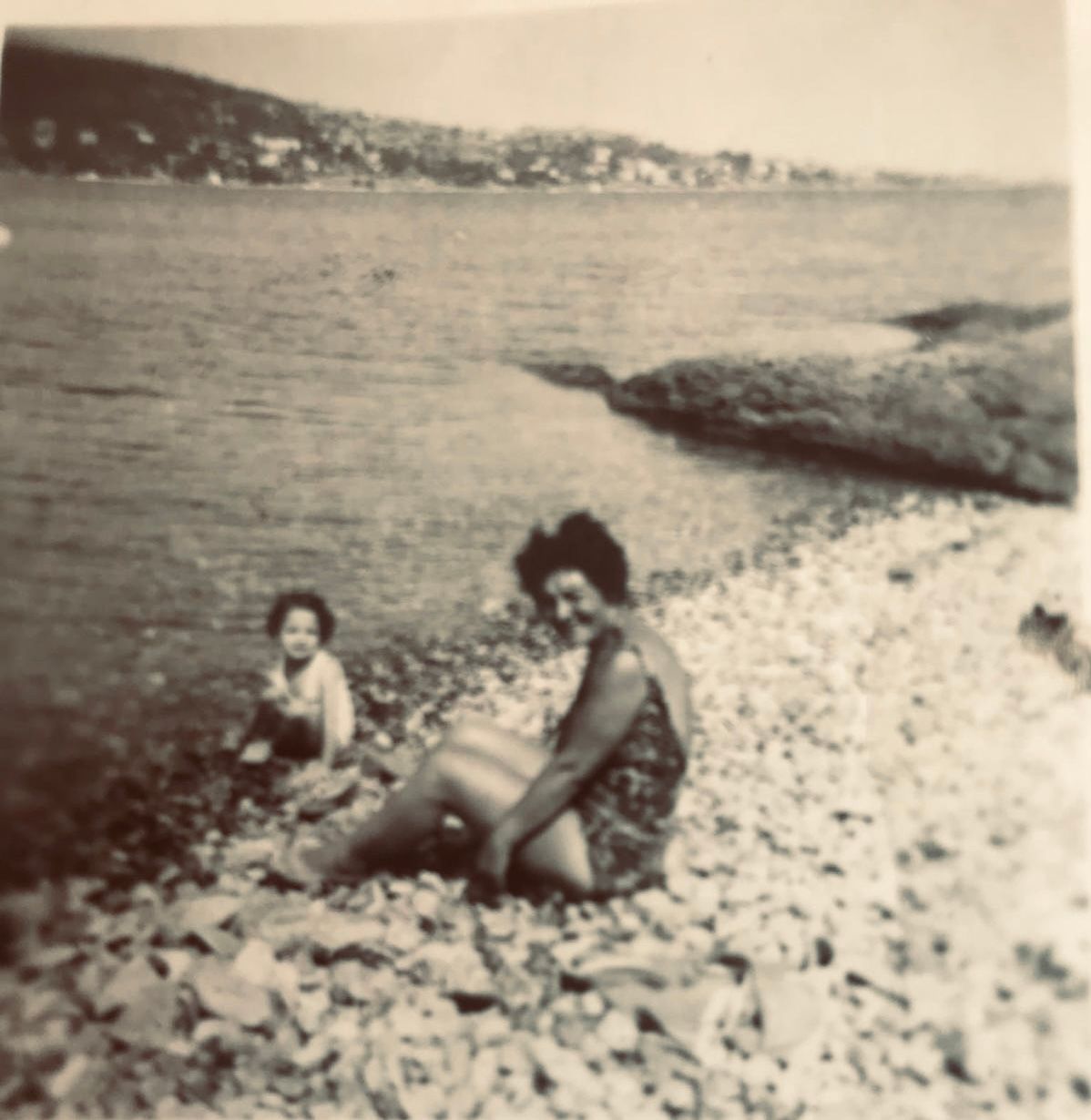
On those visits, my mother fell in love with the island and insisted that my father buy this house. We moved in during 1965. Because my mother was of Azeri heritage, she cooked delicious Caucasian pilaf. Every weekend on the island there were "Suna's Caucasian Pilaf" parties. Diplomats, ambassadors, academics, artists, and island residents were all invited. Our house was full of life and laughter every weekend. During the time when television was just arriving in Turkey, our home was always lively. My father served as the chairman of the TRT board in 1968–1969, so naturally the first television experiments in the Princes' Islands happened at our house. A TV was set up in our living room. All the children would come, sit in the middle of the room, and watch the black-and-white test broadcasts.
We had a cooperative beach. Three or four generations came together there: children, mothers, grandchildren, grandmothers—we all swam together. It was a place to socialize because the island had no cinema or theater. People came together either for an evening meal at someone's house or on those beaches. We were so close to the city, yet at the same time we felt far away. The people who live here are extremely humble. My husband Bülent, my daughter Deniz, and I still spend our summers on Sedef Island. It is the place where I feel my best and happiest. In short, this is my paradise!